
Medical Billing Built Around Your Practice.
Axis Professional Billing helps healthcare providers take control of the administrative side of their revenue cycle with reliable, end-to-end medical billing and RCM support. From verifying patient eligibility and accurate medical coding to claims submission, payment posting, denial management, and accounts receivable follow-up, we help keep every stage of the billing process organized and moving forward.
Our approach is built around reducing administrative workload, improving billing accuracy, and helping practices capture the revenue they have earned. By supporting the critical processes behind each claim, Axis Professional Billing gives physicians, medical practices, and healthcare organizations more time to focus on patient care while we focus on keeping their revenue cycle efficient, transparent, and financially healthy.

Billing Shouldn't Be The Bottleneck.
Running a healthcare practice already requires attention to patients, staff, clinical operations, and day-to-day business decisions. Your revenue cycle should provide visibility and control rather than create another operational burden.
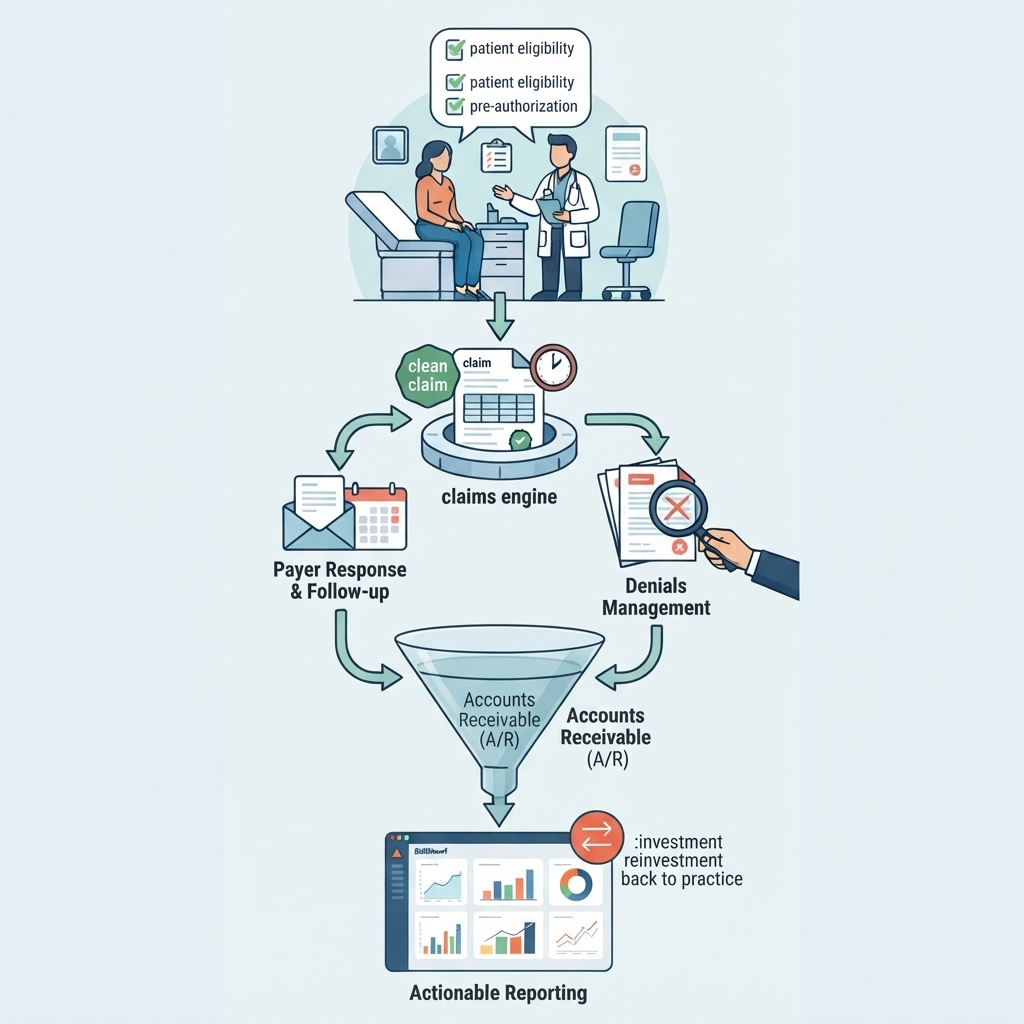
Axis Professional Billing is built to support the financial workflow behind the practice. We view medical billing as a connected process rather than a collection of isolated tasks.
That means understanding what happens before a claim is submitted, what happens after a payer responds, and where unresolved issues continue to affect accounts receivable.
We focus on the details that keep revenue moving, from clean claims and timely follow-up to resolving denials and outstanding balances. This helps providers spend less time managing billing issues and more time focused on their patients and practice.
- Eligibility and authorization issues addressed before they become avoidable claim problems.
- Claims monitored beyond initial submission.
- Denials reviewed for recovery opportunities and recurring causes.
- A/R activity connected to actionable reporting.
What We Believe Good Billing Should Do.
Medical billing is more than submitting claims. It should create a predictable, transparent, and accountable revenue cycle for every practice. From accurate coding and clean claims to denial follow-up, payment posting, and A/R management, every step should work together to protect revenue. Good billing gives providers greater visibility, fewer administrative headaches, and confidence in their financial operations.
Start Before the Claim
Clean claims begin with accurate patient information, eligibility, authorization, and documentation workflows.
Don't Ignore the A/R
Revenue does not stop at claim submission. Outstanding balances require consistent follow-up and prioritization.
Find the Pattern
Repeated denials, payment issues, and workflow problems should be analyzed rather than repeatedly treated as individual incidents.
Keep Providers Informed
Practice owners and managers need meaningful information, not confusing billing activity without context.
Revenue Problems Often Start Before A/R.
A denied claim or aging balance may be the visible problem, but the underlying cause can begin much earlier in the revenue cycle.
Axis looks across the workflow to help practices understand where revenue is getting delayed, rejected, or left unresolved.
Patient Access
Eligibility, demographics, and authorization can influence downstream claim performance.
Coding & Charge Capture
Accurate clinical-to-claim information supports cleaner submissions and appropriate reimbursement.
Claims Management
Claims need monitoring, correction, and follow-up rather than simply being submitted and forgotten.
Payments & A/R
Posting, reconciliation, and follow-up help keep outstanding revenue moving.
Denials & Recovery
Denials can reveal recurring process problems that deserve deeper review.
One Revenue Cycle. Connected Decisions.
Every stage of the revenue cycle affects what happens next. Our approach connects patient access, eligibility, coding, claims, payments, denials, and A/R into one coordinated workflow. Instead of treating each task separately, we look at how decisions at one stage impact reimbursement and performance across the entire cycle. The result is a more organized, measurable, and financially focused RCM process.
Patient Access
Eligibility, benefits, and authorization information support the front end of the revenue cycle.
Clinical to Claim
Coding, charge capture, and claim preparation move the encounter toward submission.
Claims & Payments
Claims are tracked while payments and remittances are posted and reviewed.
Denials & A/R
Unresolved balances and denials receive follow-up based on priority and available information.
Reporting & Improvement
Performance information helps identify recurring issues and areas requiring attention.

More Than a Claims Submission Company.
A strong billing partner should do more than submit claims and process transactions in the background. It should bring visibility to the revenue cycle, identify where revenue is being delayed or lost, and take action to improve performance. Practices need a partner that communicates clearly, follows through consistently, and understands the financial impact of every billing decision. The goal is not simply to bill more—it is to help the practice build a healthier, more predictable revenue cycle.
Every Specialty Has Different Billing Needs.
Every specialty has different billing needs, workflows, documentation requirements, and payer considerations. Our approach adapts billing processes to the way each practice operates rather than relying on a one-size-fits-all model. From coding and claim submission to denials, A/R, and reimbursement analysis, we align the revenue cycle with the specialty and services being delivered. This helps practices reduce avoidable billing issues while maintaining a more efficient and consistent revenue cycle.
Your Billing Team Should Feel Like Part of Your Practice.
Outsourcing billing should reduce administrative pressure without reducing visibility or accountability. Your billing partner should work as an extension of your practice, understanding your specialty, workflow, and financial priorities. From day-to-day billing activity to denials, A/R follow-up, and reporting, you should always know what is happening and why. The right team takes ownership of the revenue cycle while keeping your practice informed and in control.
Built Around Your Team
Axis works alongside practice owners, administrators, and operational teams to create a billing workflow that fits the way the practice operates.
Visibility That Helps You Decide
Billing data is only useful when practice leaders can understand what it means and where action is required.
See Where Your Billing Workflow Can Improve.
Tell us about your practice, specialty, current billing setup, and the challenges you're experiencing. A billing analysis can help identify where additional revenue cycle support may make sense.
Questions About Axis Professional Billing
Common questions healthcare providers ask before choosing a medical billing and revenue cycle management partner.